My travels is all about... My views, thoughts and experiences on/about/at/with random places of interest, persons, things, events, issues etc,. I am an eternal student with a restless mind and a tumultuous heart!

Showing posts with label World Heritage Site. Show all posts

Thursday, September 12, 2019

Sheer artistry at sublime Sanchi...where the north and south first met!

Sanchi Sthupa no 1

In 3rd Century BCE, Asoka the Great was in a dilemma. He wished to start a grand Buddhist Establishment - one that would survive for centuries. The site so selected must ensure seclusion and solitude befitting monastic life, yet it should also be close to the Imperial Capital, old highway and preferably near to a rich and populous city.

The Emperor's selection was spot on - Vedisagiri, the present day Sanchi Hill!
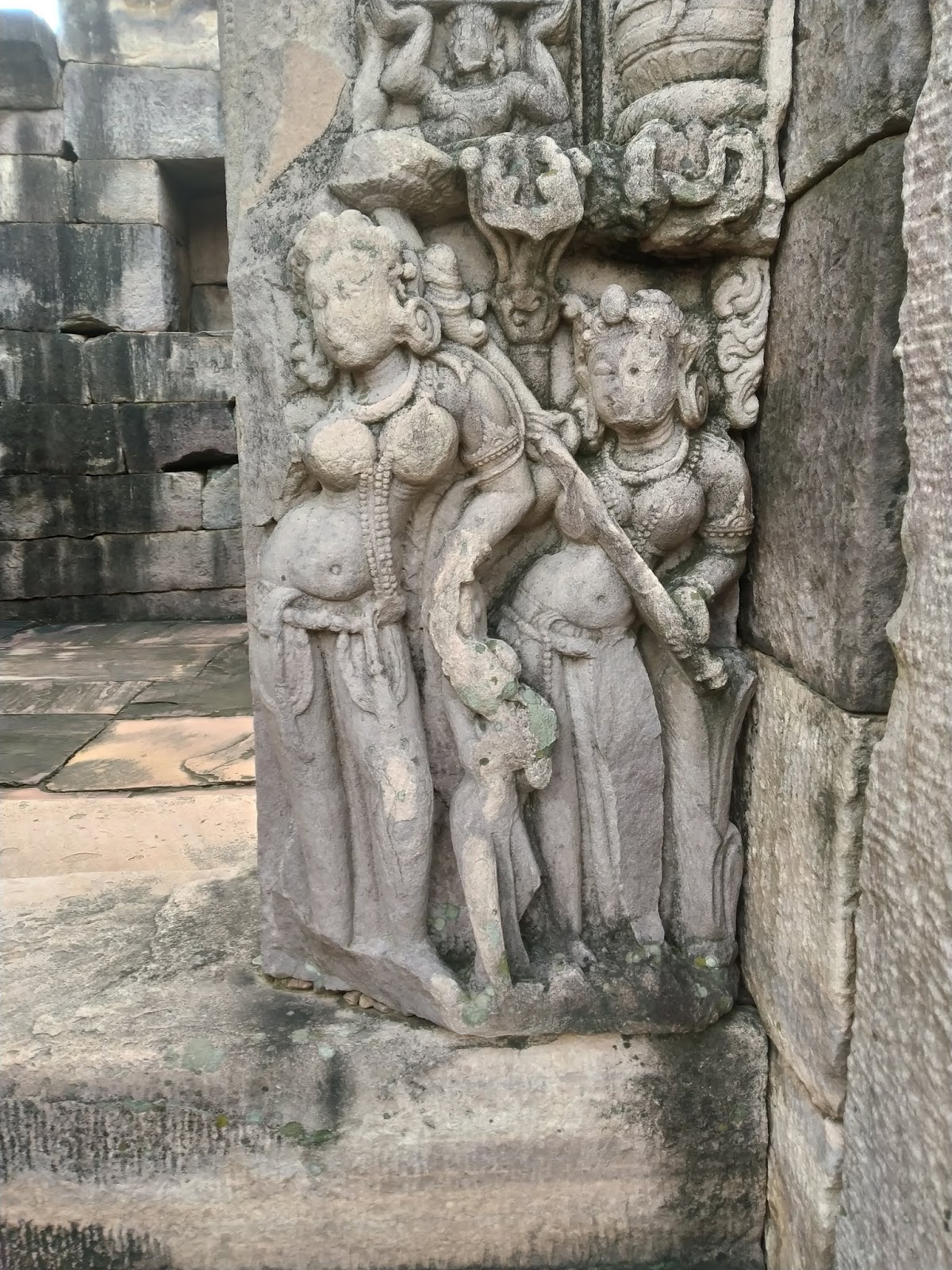
At a ruined monastry

The present day village of Sanchi is located 7 kms away from Vidisha. The Sanchi Hill, with it's two Sthupas and ruins of monastries and temples is at a distance of 1.5 kms from the village's bus stop. The Village is regularly connected by busses from Vidisha and Bhopal. The entrance fee to visit this world heritage site is Rs.25/- for Indians, and the charge includes a visit to the Interpretation Centre/Museum on the hill too, which would be closed on Fridays.

An Inscription on stone

What to see? Sthupa no.1 is simply an exquisite masterpiece! Originally built as a brick Sthupa by Asoka the Great, many additions and embellishments were made to this in the later days by Sungas, Guptas and Satavahanas. The Sthupa has entrance archways on four directions, with lavish ornamentation in stone - the best in India! Tales from Vessankara Jataka, mythical creatures like Griffin, King Prasenajit of Shravasti etc are depicted in stylish panels with astounding detail. On a railing near the Eastern archway, a Sanskrit grant inscription was engraved by the Gupta Emperor Chandragupta II Vikramaditya in Golden Hue (c.410 CE). On the top portion of the Southern archway, there is another famous inscription in Prakrit Brahmi - that of Satavahana ruler Satakarni I (Chanda Siri Satakarni) - hence this is where the north and south first met! Sthupa no.2 located 1 km away from the main Sthupa has many motifs and carvings, although not as lavish as that of Sthupa no.1. Apart from these two sthupas, there is a minor Sthupa, ruins of temples and monastries built much later. Just outside the main entrance, there is a Chaityagriha built by Srilankan monks that has the relics of Sariputta & Moggallana.

Sanskrit Inscription of Chandragupta II Vikramaditya in c.410 CE, Eastern Archway, Sthupa no 1

A Script was deciphered! Many Pillars and stones here contain characters/minor inscriptions in Prakrit Brahmi. After a detailed study of these, the Brahmi script was finally deciphered by a British Indian Mint Officer James Princep. All these inscriptions end with the word 'Dana' i.e, donation - in two charachters - this working hypothesis became the basis for deciphering an entirely unknown script!

Credit must be duly given to the plethora of British archeologists who rendered yeoman service to this site (Sir Alexander Cunningham, Captain Taylor, James Princep etc), and it must be mentioned here that the Nawabs and Begums of Bhopal took great care in scientific protection of this site after it's rediscovery in 19th Century.

Under the Lioned Capital Pillar - Sthupa no 1

Sanchi holds a special place in Indian History. It was here that the north and south first met. It was here that the futility of war was reiterated giving way for the love of humanity and the victory of Dhamma!

Centre - King Prasenjait of Shravasti out for a walk, Below - Pipal tree worship
 

Saturday, August 3, 2019

The Wonder that is Ellora


What is the place and how to reach?

Ellora also locally called Verul/Elapura/Elura, located approximately 30 Kms from Aurgangabad on the picturesque Aurangabad-Kannad route is home to around 100 historical caves (around 40 for public exhibit) of highest sculptural and cultural essence. It is quintessentially, a site of secular Ancient India - Hinduism, Jainism and Buddhism existed with mutual respect and competed with each other only in artistic sense of carving beauty by cutting hills and rocks.  This place is surely the rock-cut architectural capital of India - a gateway to the glorious past of our nation (c.600-1000s CE), attributed to many great kingdoms like Rashtrakutas, Kalachuris, Yadavas etc.

Regular buses/share autos/jeeps ply from Aurangabad Central Bus station to Ellora. In fact, Daulatabad, Khultabad, Ellora and Grishneshwar are located on the same route - in that order. This World Heritage site has wheelchair assisted entrance for the needy - one of the rare ones to do so! The Entry fee is Rs.40 per head (Indians). Directly opposite the entrance is Cave 16 (Kailasa Cave Temple).

Cave 16 - Kailasa Cave Temple

What to expect?

Plenty to please the inquisitive eyes, curious mind and artistic heart that would dominate the aching legs! Caves 1-12 located to the left side of the entrance are related to Buddhism. The depiction of Bodhisattva Padmapani (Lotus-Bearer) along with his female attendants is a recurring theme in Buddhist caves. Cave 10 is a Chaitya, also called 'Vishwakarma Cave/Carpenters Hall' - because the stone work of the ceiling resembles the wood work of a modern day carpenter! Cave 12 is a large triple-storied Vihara (Resting place of monks). Caves 30-34 located to the far right side of the entrance are related to Digambar Jainism. The best of these is Cave 32. On rediscovery of this cave, the Britishers mistook the idol of Jain cult deity Matanga as Hindu king of Gods - Devendra, and hence named it as Indra Sabha. The carvings of Tirthankars with religious motifs inside these caves are much finer in detail that in Hindu/Buddhist caves.

Caves 17-29 are related to Hinduism - mostly centered around Lord Shiva. Cave 15 has two floors - on the top floor, there is a temple dedicated to Lord Shiva with many carvings of Varaha, Mahishashura Mardhini etc on walls. Cave 16, also called Kailasa Cave Temple, is the largest single rock (monolithic) excavation in the World, attributed to Rashtrakuta king Krishna I (c.Late 8th Century) - so sublime and awe inspiring! Brilliant pillars resembling Greek style, mini-carvings of Ramayana (South Wall) and Mahabharata (North Wall), life like sculptures of elephants - these make this monument a must visit place. Cave 21 called Rameshwar cave temple is another fine cave. Cave 29, located a bit far, called Dhumar Lena/Seeta ki Khai is perhaps the most under-rated Hindu cave. It has colossal reliefs/friezes of an epic scale - beautiful river goddesses, marriage of Lord Shiva and Godess Parvati, Lord Shiva slaying the demon Andhakasura as Godess Parvati wathces in joy etc. Perhaps the finest one among these is the concept of 'Ravana lifting/shaking Kailasa' - an obsessive dominant theme here, found in Caves 16 (twice), cave 21 and cave 29.

Ravana lifting/shaking Kailasa - Cave 29

Lord Shiva slays Andhakasura as Godess Parvati watches in joy - Cave 29

Beware of/What not to expect?
  • There is no proper bus stand at Ellora caves - no place to sit once outside the caves while waiting for buss - it's only a junction, a sort of centre teeming with hawkers and toursits.  
  • If you got to visit this place, do not miss the important caves - Caves 1,5,10,12,15,16,21,29,32. Since caves 29, 32 are very far from the entrance (1.5-2 kms), most people skip them and there is always a huge crowd at Cave 16. In case of too little time, there's a bus from the entrance (cave 16) that takes you there for a charge of Rs.20.
  • Ideally for such a huge site, the drinking water facilities are disappointing - there are only 2 or 3 taps - so plan accordingly. 
  • Avoid visiting in summer - it gets too hot. I was lucky to visit it on a rainy day with very few tourists around.  

Entrance to Cave 32 - Indra Sabha


The Wonder that is Ellora (On Ellora Caves)
#MyTravels - Ellora Caves (July 2019)


The Wonder that is Ajanta


What is the Place and how to reach? 

Ajanta Caves of Maharashtra located between Aurangabad (100 Kms) and Jalgaon (55 Kms) is perhaps India's most eco-friendly man-made world heritage site. This place consists of around 30 caves (26 numbered and for public exhibit), belonging to Buddhism (predominantly Mahayana), carved in two distinct phases dating from c.200sBCE to c.450sCE. They are attributed to many ancient kingdoms like Guptas, Vakatakas, Satavahanas etc. These caves contain some of the best, finest and earliest paintings and sculptures of Buddhism.

The entrance point to the caves is located in a beautiful valley, 4 kms away from the village of Ajanta, connected by share autos and jeeps. Mere entry into the entrance point requires a charge of Rs.15. From the entry point, separate government buses ply to the Caves (charge of Rs.20/Rs.35) from a designated bus-bay. The entry point has a cluster of shops selling food items and souvenirs. Further, at the caves, the entry ticket is Rs.40/- for Indians.
 
Bridge over Waghora river at Ajanta Caves

What to expect?
 
A laid-back and serene spot where history and nature conspire with each other - I was lucky to visit this on a rainy day morning with very few tourists. The constant sound of the adjacent waterfall, a delightful drizzle that drums up the mood, and the astonishing fact of walking through and witnessing one of man's greatest creations - that's what Ajanta offered that day.

Among the caves, - Cave 1 - one of the latest to be excavated has some great life size paintings of Boddhisatvas Padmapani and Vajrapani (manifestations of Buddha). Cave 2 also has some interesting paintings, partly fragmented inspired by Jataka tales. Caves 9 & 10 are sort of experimentative Chaitya halls (prayer halls for Buddhist monks) with the Buddha-Sthupa at the centre. There is a brilliant illustration of Mudras of Buddha & Bodhisattvas in Cave 10. Cave 16 is another Chaitya hall that was described in details by the Chinese monk, Xuan Zang and is attributed to Vakatakas. It has some paintings from Buddha's life predominantly stories of his compassion. Cave 17, with a pillared hall has some fine sculptures outside the facade. Cave 20 is also another must visit place - one of the largest Chaitya halls of the site.

Boddhisatva Padmapani painting in cave 1

But, my favourite one of the lot is Cave 26. Cave 26 is a Mahayana Mahachaitya hall, interspersed with huge pillars. On the walls of the cave, striking hand-carved rock art depicting events from the life of Buddha are simply mesmerizing. One should not miss visiting this and two such panels still dance before my eyes - the fist is the Mahanirvana of Buddha - a 20 feet Buddha sculpture separating two distinct sub-panels - with the humans grieving his death at the bottom and celestial beings about to welcome him with joy on the top. The other one is the 'Temptation of Mara' panel - as per Buddhist mythology, the demon Mara sends his beautiful daughters and goblins to distract Buddha's penance, but the latter remains calms and unperturbed at the centre - in his 'BhoomiSparsha Mudra'.

They had come to him glittering with beauty –
Taṇhā, Arati, and Rāga –
But the Teacher swept them away right there
As the wind, a fallen cotton tuft.
- Text from Samyutta Nikaya, describing how Buddha dealt with the daughters of Mara.
Entrance to Cave 2

Beware of/What not to expect?
  • Touts/Shop agents who sweet talk and coerce you into buying things that you may not need. If interested in buying souvenirs, please do so only from the designated shops near the bus bay
  • If you are traveling alone, the public transport is infrequent. There are government tourism buses from Aurangabad but they come with a catch - you can't explore the place at your leisure and have to adhere to their timings.
  • Do not use flash photography/video once inside the caves to capture paintings. They are rapidly deteriorating and will naturally disappear in due course.  
  • The entrance point is the only place where you'd find food stalls, and the caves have only drinking water facility - so plan accordingly.
  • If needed, Do engage a guide with valid credentials available at the entrance point only. I did not need one, as I had some awareness about the caves and am naturally interested in the subject of history. 

Temptation of Mara - Cave 26


The Wonder that is Ajanta (On Ajanata Caves)
#MyTravels - Ajanta Caves (July 2019)


Monday, July 8, 2019

Konark and Puri


"Here the language of stone surpasses the language of human." - Gurudev Rabindranath Tagore on Konark Sun Temple.  

Konark Sun Temple

Konark Sun Temple - Temple farther/ South side

The Summer is over, or so it seems. Under the benign gaze of the rain bearing clouds, a jam-packed Private buss with very little room to stand took me from Bhubaneshwar's Kaplana Square to Konark Sun Temple, a place that I've wanted to visit for a long time. Public transport is an issue. There are tourist packages by OSTDC,but I decided to go alone, taking my own time to enjoy the monument.  Past the lust green rural terrain of Odisha, via the towns of Nimpada and Gop, finally, I got down at the Bus station of the NAC (Notified Area Committee) of Konark. 

The only complete stone wheel

One of the Seven Horses

Clearly visible from a distance, Konark Sun Temple, the monumental 'Black Pagoda' built by one of the Greatest Kalinga Eastern Ganga Emperors, 'Langula' Narasingha Deva I stands at the centre of this town. An area of 500 meters around this majestic temple, although teeming with little shops and hawkers, is declared as 'Plastic Free Zone'. At the entrance, there is a raised Mandapa called 'Nata Mandir' guarded by two stone-Lions on either side, with beautiful carvings of Odissi and ornamented pillars - a magnificent sight! Beyond this lays the temple - now almost caving in, supported by a large wooden superstructure. Designed as an ornamented chariot of the Sun-God, Lord Surya, and symbolically drawn by stone carved statues of Seven Horses (only 3 can be noticed as of today, the rest are completely destroyed), this temple once had 24 Stone wheels exquisitely carved with 24 spokes each representing 24 hours of a day. Sadly, only one stone wheel is completely undamaged. Towards the right, there are ruins including that of a kitchen. 

Kalinga Lion Motif in Stone near Nata Mandir

Brutal representation of a War Elephant

Interestingly, the original Vimana-Deul of the temple which measured upto a height of 70 metres no longer exists as it was completely destroyed in 1837. In the South west and South east, there are two separate shrines dedicated to Mayadevi (an unkown deity some would associate as Chaya Devi, wife of Lord Surya) and to Vaishanava tradition respectively. A walk around this monument, is spellbinding and brings one close to an era of Kalinga Grandeur - when War Elephants clashed and Maritime trade prospered. Just outside the monument across the road, there is an archeological museum dedicated exclusively to this Sun Temple. It is a must visit - not the case unlike many museums where photography has a separate charge/or is prohibited. It has some wonderful artifacts! A short documentary is shown inside a theatre - I only wished they'd explain more interesting scientific facts about the temple rather than just myths. It was around 8.30 in the morning when I reached here, and it's almost 11.30 by the time I'm done.  

Makara (Crocodile) Motif, Mayadevi temple

Nata Mandir

The trip from Konark to Puri is very enjoyable. The road runs via the famous Chandrabhaga beach, almost parallel to the Bay of Bengal, criss-crossing the Balukhand-Konark Wild Life Sanctuary. Once again it's a jam packed private buss, but I managed to get a seat. A single main road like a straight line, large and segregated connects the Shree Kshetra (Jagannadh Temple) with the bus-stop. Initially skeptical about how some Pandas mistreat gullible piligrims - all fears found to be false in my case, I had a wonderful experience in the temple. It's a pleasant afternoon, but there is no crowd, as the Rath Yatra is yet to start. There is an element of disorganization, but the architecture, the ambiance, the feel...it's all amazing & perhaps marks one of the finest temples that I've visited. I took the Bhog offering too, and the Bhog (Prasadam) is prepared in the kitchen (said to be one of the largest in the world) within the temple premises supervised by the Annadan Bhog Committee. 

Puri Shree Kshetra


Chariots getting ready for Rath Yatra
As I've returned to Bhubaneshwar, I've only wished I had 1000 eyes (Sahasraksha) like Devendra to properly and prudently appreciate the enormous & elegant Sun Temple of Konark (Kainapara) and the Shree Kshetra!


#Mytravels, Konark & Puri, 
30eth of June, 2019.


Sunday, June 23, 2019

Witnessing the Chalukyan legacy...

Badami, Aihole and Pattadakal - located in the district of Bagalkot of Karnataka constitute a single World Heritage site. They are an excellent architectural source of the past, albeit on a lesser scale of size, if one were to compare with Ajanta and Ellora.

Badami, also called Vatapi was once the capital of Chalukyas (c.6th-8th Centuries). As per a myth, the Great Sage Agastya vanquished the demons Vatapi and Ilvala here. Located almost one and half hours away from the district head-quarters, the town is well connected by road. The railway station is 4kms away from the town's centre. There are 4 cave temples here dedicated to Saiva (Cave 1), Vaishnava (Caves 2 & 3) and Jaina (Cave 4) traditions. The carvings on the walls of the caves are simply exquisite! A dancing Lord Shiva as Nataraja along with a rather short Lord Vinayaka in the first cave and the simply marvelous relief of Lord Vishnu as Bhu-Varaha saving Bhu Devi in the second cave are captivating and iconic! The Red color of the hill adds a certain charm to the experience. The third cave, perhaps the largest has many panels of Lord Vishnu in some of his avatars. Various Jaina motifs are depicted in the fourth cave. Abutting these cave temples, on the banks of the almost dried Agasthya Lake are two separate temples, jointly called as 'Bhootanatha Temple Complex', dedicated to Lord Shiva. The ruins of the Badami fort on a hill and few smaller temples are located nearby. It is very easy to cover all these adjacent places. I planned a single day such that in the morning I was able to cover Bijapur/Vijayapura and in the evening - Badami!


Bhu-Varaha Panel, Cave 2, Badami

Into the Chalukyan capital  - Badami

Located almost 30kms from Badami, Pattadakal/Raktapura 'the coronation city'  has a cluster of temples dedicated to Lord Shiva in various forms. The frequency of busses from Badami to Pattadakal and Aihole is very less, so people rely on autos. The architecture here is a mixture of North Indian (Nagara/Rekhi) and South Indian (Dravida) styles, and is the zenith of early Chalukyan temple building. Garuda motif was liberally used to decorate the welcoming archways of Garbhagrihas - a Chalukyan rarity since the Garuda is associated mostly with Lord Vishnu rather than with Lord Shiva. The temple carvings here are iconic, and are drawn from Mahabharatha, Bhagavatam and other puranas. A Pillar inscription by Chalukya Mangalesha describes various temple grants. The biggest temple here is Lokeswara/Virupaksha temple named in honor of Lokeswari, a Chalukyan Queen.


Pattadakal
Pattadakal

Aihole is much farther from Pattadakal, and there are an estimated 120 temples in and around this little village. In fact there are so many monuments littered here and there in the village that one could not walk for at least 10 feet without stepping into an ancient temple or stepping on an old rock. Temples here like Durga temple, Ladkhan temple, Chakra temple evidently belong to a much earlier era and appear to be simple constructions unlike at Pattadakal. However, the must visit place here is a rock-cut and carved temple of Lord Shiva, called RavanaPhadi - some of the grandest reliefs are found here - pinnacle of Chalukyan rock art - Arhdanaadeeswara, Hari Hara Panel which depicts Lord Shiva and Lord Vishnu as equals and a fine carving of an almost skeletal Bhrigu Maharshi having a darshan of Lord Shiva and Parvati as watched by three primary river goddesses. But, the piece de resistance is this - a ten handed Lord Shiva dancing in joy, surronded by Godess Parvati, Skanda/Kumara (partly defaced), Lord Vinayaka and watched by the Saptamathrikas! It was spellbinding!

Lord Shiva dancing, Ravan Phadi Cave
 
Inside Ravan Phadi Cave


En route, I stopped at Mahakuta - Dakshin Kashi, considered as the original Vatapi. The Malaprabha river was gently flowing by. Perhaps some 1400 years ago, Chalukya Pulkesin II could've proudly looked at the same river after defeating Harshavardhana and Pallava Mahendravarman. Even if he does somehow visit Badami today, he'd look at his own monuments with the same pride!


On #Mytravels @ Badami, Pattadakal, Aihole, 
14th-15th of June, 2019.